

Oncology MDT multidisciplinary team discussion at Jinshazhou Hospital, Guangzhou University of Chinese Medicine
CANCER TREATMENT · GUANGZHOU

Cancer Treatment,
Starts with Finding the Right Treatment Pathway for You.

From a new cancer diagnosis and postoperative adjuvant therapy to recurrence, metastasis or progression after previous treatment, the medical team integrates imaging, pathology, molecular testing and MDT multidisciplinary review to consider surgery, precision radiotherapy, systemic therapy, interventional treatment and other anticancer approaches, with the goal of developing an individualized treatment pathway.

New DiagnosisPostoperative TreatmentCancer RecurrenceStage IV / Metastatic
PRECISION CANCER CARE

Understand the Full Picture First,
Then Decide the Next Treatment Step.

01
Precision DiagnosisDiagnosis & Staging
02
MDT Multidisciplinary ReviewMultidisciplinary Review
03
Develop the Treatment StrategyTreatment Strategy
04
Treatment & Dynamic AdjustmentTreatment & Reassessment
The key is not simply to “choose one treatment,” but to determine the right treatment sequence first.Even with the same cancer type, differences in stage, metastatic sites and previous treatment history can lead to very different treatment pathways.
DIAGNOSISImaging · Pathology · Molecular Testing
MDTMultidisciplinary Review
TREATMENTLocal + Systemic Treatment Strategy
REASSESSMENTAdjust the Plan Based on Treatment Response
YOUR CURRENT SITUATION

Different Stages of Cancer,
Require Different Treatment Priorities.

Even for the same cancer type, treatment goals and priorities may differ at diagnosis, after surgery, at recurrence or after metastasis. Identifying the current stage first helps determine what should be prioritized next.

01
NEWLY DIAGNOSED

Newly Diagnosed

Newly Diagnosed Cancer

When cancer is newly diagnosed, the first step is usually not to rush into surgery, chemotherapy or radiotherapy, but to confirm the pathology, stage and extent of disease clearly.

Confirm the cancer type and pathology results
Determine whether lymph-node or distant metastases are present
Assess whether genetic or molecular testing is needed
Explore the Newly Diagnosed Treatment Approach
02
AFTER SURGERY

After Surgery

Post-Surgery Treatment

After surgery, the next step is to evaluate the pathology, stage and recurrence risk to determine whether additional adjuvant treatment and follow-up monitoring are needed.

Whether adjuvant chemotherapy or radiotherapy is needed
Whether targeted, endocrine or other drug therapy is needed
Assess recurrence risk and follow-up monitoring plans
View Post-Surgery Treatment Options
03
RECURRENT CANCER

Cancer Recurrence

Recurrent Cancer

Recurrence does not mean there are no treatment options left. The location of recurrence, extent of disease and previous treatments need to be reassessed.

Whether the recurrence is local or distant
Whether previous treatment limits the next options
Whether local treatment or new drug options remain available
Explore Reassessment After Recurrence
04
STAGE IV / METASTATIC

Stage IV / Metastatic

Metastatic Cancer

After cancer has metastasized, treatment usually needs to consider both systemic disease control and management of high-risk local lesions in areas such as the brain, bone, liver or lung.

Control the overall systemic tumor burden
Treat high-risk or symptomatic metastatic lesions
Continue adjusting the next treatment phase based on response
Explore Metastatic Cancer Treatment
Not Sure Which Situation Best Matches Your Current Condition?

Send us your pathology, latest CT / MRI / PET, current medications and previous treatment records. The medical team can review the available information and help identify the next priority.

CANCER TYPES

Different Cancer Types,
Require Different Treatment Strategies.

Different cancers vary in pathology, patterns of spread and sensitivity to treatment. Select a cancer type to learn about common diagnostic priorities, treatment approaches and how complex cases may be evaluated.

LUNG CANCER

Lung Cancer

From localized disease to metastases in the brain, bone or other sites, treatment planning should integrate staging and molecular testing.

BREAST CANCER

Breast Cancer

ER, PR and HER2 status, together with recurrence or metastasis, help determine the sequence of systemic and local treatment.

COLORECTAL CANCER

Colorectal Cancer

The primary tumor, liver or lung metastases and molecular features should be assessed before deciding the timing of surgery, systemic therapy and local treatment.

LIVER CANCER

Liver Cancer

Tumor number, location and liver function help determine the role of surgery, intervention, ablation, radiotherapy and systemic treatment.

STOMACH CANCER

Stomach Cancer

Treatment planning considers pathology, stage, biomarkers such as HER2, and whether peritoneal or distant metastases are present.

PANCREATIC CANCER

Pancreatic Cancer

Key considerations include resectability, vascular involvement, distant metastasis and how systemic and local treatments may be combined.

PROSTATE CANCER

Prostate Cancer

PSA, Gleason score, imaging and previous treatment guide decisions on local radiotherapy, systemic therapy and management after recurrence.

KIDNEY CANCER

Kidney Cancer

After recurrence or metastasis, immunotherapy and targeted therapy are often considered together with local treatment of brain, lung, bone or other lesions.

NASOPHARYNGEAL CANCER

Nasopharyngeal Cancer

Radiotherapy is often a key treatment modality, with the overall plan guided by stage, lymph-node involvement and distant metastasis.

CERVICAL CANCER

Cervical Cancer

Stage helps determine the role of external-beam radiotherapy, brachytherapy, systemic treatment and further treatment after recurrence.

BRAIN TUMOR

Brain Tumor / Brain Metastases

The number, size and location of lesions, previous radiotherapy and neurological symptoms help determine whether surgery or precision radiotherapy is appropriate.

LYMPHOMA

Lymphoma

Pathological subtype, stage and treatment response guide systemic therapy, radiotherapy and subsequent reassessment.

Don’t See Your Cancer Type Listed?

You can still send us your pathology, imaging and previous treatment records. Our international patient team can help organize the information and identify the most appropriate specialty for further consultation.

TREATMENT OPTIONS

Cancer Treatment Is Not a Single-Choice Question.
Treatment Should Be Centered Around the Patient, Not a Single Machine.

Different treatments may play different roles at different stages. The medical team considers cancer type, stage, tumor location, previous treatment and the patient’s overall condition to determine which approaches should be combined and in what sequence.

SURGERY

Surgical Oncology

For some resectable tumors, surgery remains an important treatment option. The key is choosing the right timing for surgery.

Resection Minimally Invasive
PRECISION RADIOTHERAPY

Precision Radiotherapy

The most appropriate precision radiotherapy approach is selected based on tumor location, size and previous treatment.

SRSSBRTIMRTVMAT
SYSTEMIC THERAPY

Systemic Therapy

When there is systemic risk or metastatic disease, drug therapy plays an important role in controlling disease throughout the body.

Chemotherapy Targeted Immunotherapy
INTERVENTIONAL ONCOLOGY

Interventional Oncology

Interventional treatment may be considered for local control based on tumor location, blood supply and the patient’s overall condition.

Embolization Image Guidance
ABLATION & LOCAL THERAPY

Ablation & Local Therapy

For selected localized or oligometastatic lesions, ablation and other local treatments may be considered to improve local control.

Ablation Local Therapy
INTEGRATED CANCER CARE

Integrated Cancer Care

Care also addresses treatment tolerance, pain, nutrition, rehabilitation and long-term follow-up throughout the treatment journey.

Symptom Control Nutrition Follow-up
Patient-Centered Treatment Planning Treatment is combined around the patient’s condition rather than limited to one technology.
The key is not “which treatment is best,” but which combination best fits the patient’s current condition.

The medical team integrates pathology, imaging, stage, molecular features and previous treatment to determine the priority between local and systemic treatment.

MDT TREATMENT PLANNING

Do Not Decide the Treatment First.
Decide the Treatment Sequence First.

Even when two patients have the same cancer type and stage, their treatment sequence may still differ. The value of MDT is to understand the full disease picture, risks and treatment goals first, then decide which treatment should come first.

SINGLE-SPECIALTY THINKING

When Decisions Start from One Specialty Alone,
the Focus Can Shift to “What We Can Do.”

A single treatment modality is not necessarily wrong. The problem is that without first understanding the overall disease and treatment priorities, “what can be done” can easily be mistaken for “what should be done first.”

×
“Operate First and Decide Later” If distant metastases are already present, the timing of surgery may need to be reassessed.
×
“Start with Intensive Chemotherapy and See” If there are high-risk lesions in the brain, bone or other sites, it may not be appropriate to wait only for systemic treatment response.
×
“More Radiotherapy Sessions Must Be Better” Radiotherapy planning focuses on dose, target coverage and normal-tissue protection—not simply the number of sessions.
MULTIDISCIPLINARY DECISION

MDT Answers Four Key Questions First,
Then Decides How Treatments Should Be Combined.

Treatment decisions are not based only on “what technologies are available.” Pathology, imaging, previous treatment and current risks are reviewed together.

01
Define the Full Disease Picture First Primary tumor, metastatic sites, pathology and molecular features.
02
Identify the Most Urgent Problems Which lesions may threaten life, neurological function, pain control or organ function.
03
Set the Sequence of Local and Systemic Treatment Determine whether surgery, radiotherapy, systemic therapy or intervention should be sequenced or combined.
04
Adjust Again Based on Response Reassess with imaging after treatment, then determine the next phase.
MDT Is Not Simply “Many Doctors Reviewing Together” — It Is About Deciding Priorities Together. What matters is when to treat, what should come first and how far each treatment should go.
Even with Stage IV Lung Cancer, Two Patients May Need Completely Different Treatment Sequences. One patient may need high-risk brain metastases treated first, while another may need systemic therapy to take priority. The treatment pathway depends on the full disease picture—not just the diagnostic label.
Submit Reports for Review →
STAGE IV · METASTATIC CANCER

Cancer Has Metastasized,
the Treatment Goals May Change — but Treatment Options Still Remain.

Metastatic cancer usually requires both systemic disease control and management of high-risk local lesions. The treatment goal may shift from simply “removing one tumor” toward long-term control, risk reduction, symptom relief and preservation of quality of life.
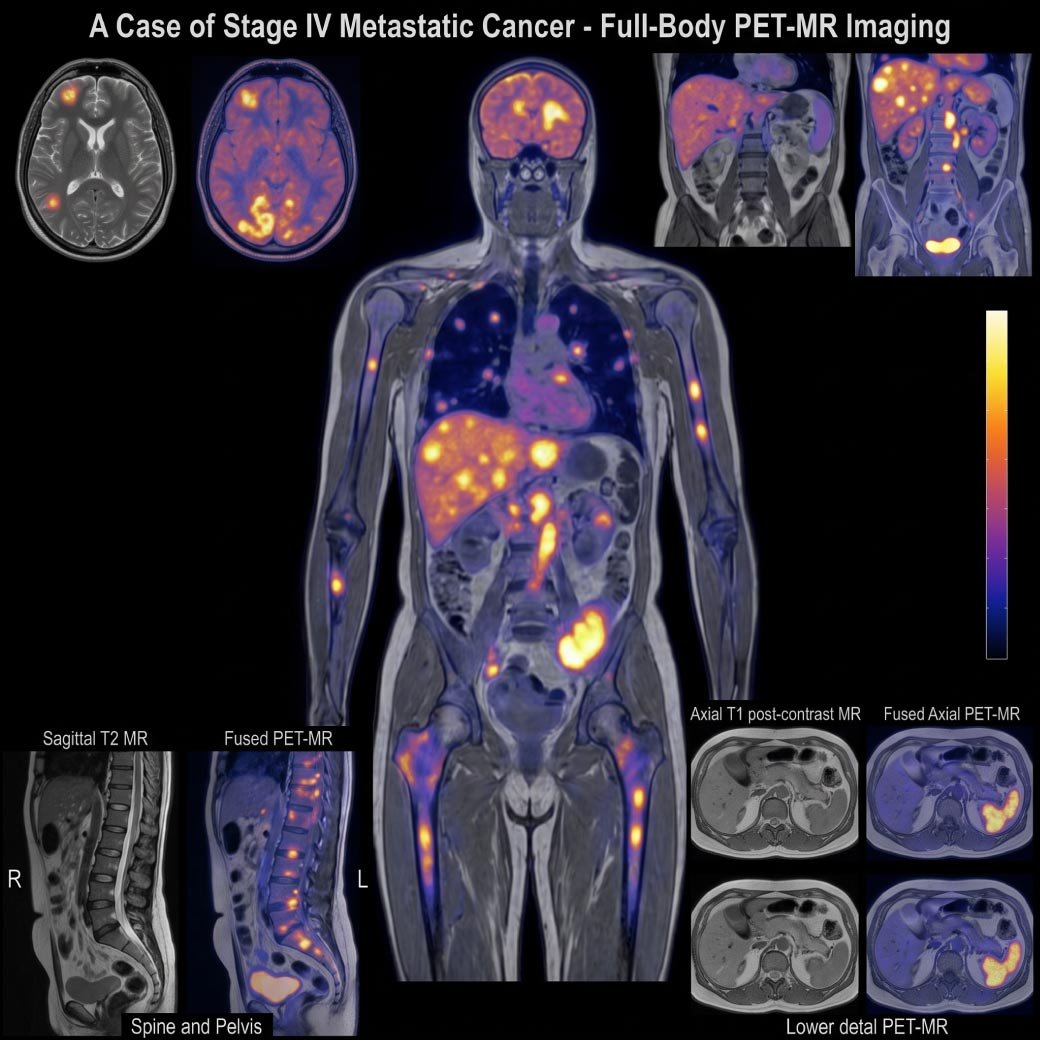
PET/MR whole-body imaging assessment for metastatic cancer
RESTAGING · MDT REVIEW After Metastasis, the First Step Is Not to Rush into Changing Treatment — It Is to Reassess the Full Disease Picture. Imaging, pathology, previous treatment and current symptoms need to be reviewed together to determine which issues require the highest priority.
COMBINED TREATMENT STRATEGY

Stage IV Treatment Usually Involves More Than One Approach.

The medical team considers systemic disease control, local risks and treatment response together, then decides how systemic therapy, radiotherapy, surgery, intervention or other local treatments should be combined.

Systemic Treatment Controls overall tumor burden through chemotherapy, targeted therapy, immunotherapy or other systemic treatments.
Local Treatment For specific lesions in the brain, bone, liver, lung or other sites, radiotherapy, surgery, intervention or ablation may be considered.
Ongoing Reassessment Imaging and clinical response are reassessed to determine whether treatment should continue, change or be intensified in the next phase.
Systemic Treatment + Local Treatment + Ongoing Reassessment These approaches do not replace one another; together they form the treatment pathway at different stages.
BRAIN METASTASES

Brain Metastases

The number and location of lesions, symptoms and previous radiotherapy help determine the priority of local treatment.

LUNG METASTASES

Lung Metastases

The number and size of lesions and overall disease status help determine whether observation, local treatment or systemic therapy is appropriate.

LIVER METASTASES

Liver Metastases

The number and location of lesions and liver function help determine whether radiotherapy, intervention, ablation or other local treatments may be appropriate.

BONE METASTASES

Bone Metastases

Pain, fracture risk and the risk of spinal cord compression directly affect whether local treatment should be prioritized.

COMMON MISUNDERSTANDING “Once It Is Stage IV, There Is No Need for Local Treatment.”

In reality, some patients still need local treatment for high-risk lesions, symptomatic disease or tumors affecting organ function.

CLINICAL REALITY The Key Question Is: Which Lesions Must Be Controlled First, and Which Can Be Managed by Systemic Therapy?

The correct treatment sequence depends on metastatic sites, disease burden, symptoms and sensitivity to systemic treatment.

WHEN CANCER PROGRESSES

The Cancer Has Progressed Despite Treatment,
the Next Step Is Not Simply “Switch to Another Drug.”

Disease progression can mean different things. The previous treatment may have lost effectiveness, only a few lesions may have escaped control, or the tumor’s biological characteristics may have changed. Reassessing the reason for progression is essential before deciding the next treatment pathway.

PROGRESSION ≠ END OF OPTIONS

One Treatment Failing Is Not the Same as “All Treatments Have Failed.”

When imaging shows tumor growth or new lesions, the first question is whether the disease is progressing systemically or only in selected lesions. The treatment logic for these two situations can be completely different.

The Key Question Is Not Only: “What Other Drug Can Be Used?” First ask: Why did it progress? Where did it progress? Is the previous treatment still controlling part of the disease?
REASSESS BEFORE CHANGING

After Progression, the Medical Team Usually Needs to Revisit Four Questions.

01
Where Has the Disease Progressed? At the primary site, brain, bone, liver, lung—or at a new metastatic site?
02
Is the Progression Local or Systemic? Progression in only a few lesions requires a different strategy from widespread deterioration across multiple sites.
03
Is the Previous Treatment Still Working Anywhere? If most lesions remain controlled, the entire treatment plan may not need to be abandoned immediately.
04
Is Repeat Testing Needed? Some patients may need a repeat biopsy or molecular testing to identify new treatment guidance.
RE-TREATMENT PATHWAY

Re-Treatment Usually Begins by Reassessing the Tumor.

STEP 01

Repeat Imaging Assessment

Reassess the extent of disease, sites of progression and whether any high-risk lesions need priority treatment.

STEP 02

Review Pathology & Molecular Information Again

Review previous pathology, IHC and genetic testing, and consider repeat tissue sampling or testing when necessary.

STEP 03

Treat Lesions That Have Escaped Control

If only a limited number of lesions are progressing, precision radiotherapy, surgery, ablation or other local treatments may be considered.

STEP 04

Rebuild the Next Treatment Strategy

Based on the updated disease status, decide whether to continue the current plan, adjust systemic therapy, or recombine local and systemic treatment.

Cancer Treatment Is Not a Fixed Straight Line — It Is a Process of Continuous Reassessment, Adjustment and Replanning. When the disease changes, the treatment strategy needs to change with it.
YOUR TREATMENT JOURNEY

From Your Medical Reports,
to a Clear Treatment Pathway.

For international patients, one of the biggest challenges is not only the treatment itself, but knowing where to begin. The journey connects medical record preparation, medical review, examinations and treatment in Guangzhou, followed by continued care after returning home.

International patient examination and treatment journey at Jinshazhou Hospital
INTERNATIONAL PATIENT COORDINATION Treatment Planning Does Not Begin Only After Arrival in Guangzhou — It Starts with the First Medical Report. Understanding the condition and identifying the next diagnostic and treatment direction first helps make the transition into care in Guangzhou clearer and more coordinated.
FROM REVIEW TO FOLLOW-UP

The International Patient Journey Is Organized into Six Stages.

Each stage has a different goal: first organize the information, then clarify the treatment direction, and after arrival, finalize and carry out the plan based on actual examination results.

01
Submit Medical Reports Pathology, CT / MRI / PET, previous treatment records and current medications.
SUBMIT REPORTS
02
Initial Medical Review Review the available information to identify the key issues and any examinations that may still be needed.
MEDICAL REVIEW
03
MDT Discussion When Needed Complex, recurrent or metastatic cases may be further reviewed by multiple specialties together.
MDT
04
Complete Necessary Examinations in Guangzhou Complete imaging, pathology or other examinations as needed to confirm the formal treatment plan.
GUANGZHOU
05
Begin Treatment & Ongoing Reassessment Adjust the treatment sequence or combination when necessary based on response and clinical circumstances.
TREATMENT
06
Continue Follow-Up & Ongoing Care After Returning Home Arrange follow-up examinations, local systemic treatment or further medical coordination based on treatment results.
FOLLOW-UP
BEFORE ARRIVAL Organize the Medical Information Before Arrival Reduce repeated communication after arrival and help doctors enter the clinical assessment more efficiently.
IN GUANGZHOU Examinations, Treatment & Team Coordination Complete further examinations based on the actual condition and proceed into the formal treatment process.
AFTER RETURNING HOME The End of Treatment Does Not Mean the End of Medical Coordination Continue coordinating follow-up examinations, medications and communication about future changes in the condition.
Overseas Treatment Should Not Be an Isolated Episode of Care. A complete treatment pathway connects pre-departure assessment with continued care after returning home.
YOUR TREATMENT PLAN · SUMMARY

Cancer Treatment,
Does Not Have One Standard Answer for Everyone.

A meaningful treatment plan needs to consider cancer type, stage, pathology and molecular features, previous treatment, disease response and the patient’s overall condition together, before deciding what should be prioritized now.

01 · DIAGNOSIS Precision Diagnosis Understand the full disease picture first.
02 · PATHOLOGY Pathology & Molecular Information Understand the cancer’s biological characteristics.
03 · MDT Multidisciplinary Review Set the priorities before deciding which specialty should intervene.
04 · SEQUENCING Set the Treatment Sequence Determine how local and systemic treatment should be combined.
05 · TREATMENT Begin Treatment Carry out treatment according to the agreed goals.
06 · REASSESSMENT Ongoing Reassessment Adjust the next phase based on treatment response.
We Focus Not Only on “What Treatments Are Available,” but on What Should Be Done First Now. Even with the same cancer type and stage, two patients may need completely different treatment sequences. Treatment should follow the biology and behavior of the disease—not just the diagnostic label.
CANCER TREATMENT FAQ

Questions Patients and Families Ask Most Often

The answers below are intended to explain general treatment principles. Actual recommendations still require review of the individual pathology, imaging, previous treatment and current physical condition.

Not necessarily. The medical team will first review the pathology reports, imaging, genetic testing and previous treatment records completed at your local hospital, then determine whether the existing information is sufficient. Additional or updated tests are usually recommended only when previous studies are outdated, incomplete or insufficient to clarify the current extent of disease.
Stage IV does not mean there are no treatment options. Treatment goals may include disease control, management of high-risk lesions, symptom relief, protection of organ function and extending the period of disease stability where possible. The actual goals depend on the cancer type, extent of metastasis and the patient’s overall condition.
The first step is to determine whether the progression is local or systemic and to reassess the imaging, pathology and molecular information. Some patients may need a change in systemic treatment, while selected lesions that have escaped control may be treated with precision radiotherapy, surgery, ablation or other local approaches.
Whether radiotherapy is appropriate depends on the number, size and location of lesions, symptoms, previous radiation dose and overall disease control. Metastatic disease does not automatically rule out radiotherapy, and not every metastatic lesion necessarily requires radiation.
Because treatment is not based only on the cancer name. Stage, pathological subtype, genes and biomarkers, metastatic sites, previous treatment response and the patient’s physical condition all matter. Therefore, even with the same diagnosis, the treatment sequence may be completely different.
Not necessarily. Most international patients can first have an online medical consultation, during which the medical team reviews pathology, CT / MRI / PET, genetic testing and previous treatment records already completed locally.

If the available medical information is sufficiently complete, the team can often establish an approximately 80% preliminary treatment framework before the patient travels, helping the patient understand the likely examinations, treatment direction and general arrangement in advance.

If the information is incomplete, the imaging is outdated or the disease has changed significantly, the medical team may instead recommend a more comprehensive reassessment after arrival in Guangzhou.

For patients with recurrent, metastatic or more complex disease distribution, doctors may arrange whole-body imaging such as PET/MR according to the clinical situation to further assess lesion location, extent and overall disease status, while reducing the chance that important lesions are missed because of limitations in previous imaging coverage or quality.
Understand Approximately 80% of the Treatment Direction Before Departure After arrival, the remaining uncertainties can be clarified through complete examinations before the formal treatment plan is finalized.
In general, international patients may have a medical stay in Guangzhou ranging from 5–7 DAYSCommon shortest arrangement to 15–45 DAYSMore complete treatment course, depending on the examinations required, cancer type and final treatment plan.

Approximately 5–7 days at the shortest: This may be suitable for patients who complete the necessary examinations, doctor / MDT review, treatment planning and the first treatment, then return home to continue follow-up treatment when appropriate.

Approximately 15–45 days for a more complete treatment course: A longer stay may be needed when the patient completes a phase of radiotherapy, systemic therapy, combined treatment, additional examinations or observation of treatment response in Guangzhou.

These are common time ranges, not fixed hospitalization or treatment durations. The actual stay depends on the patient’s condition, examination results, treatment approach and physical recovery after treatment.
The treatment plan should include follow-up. Depending on the situation, imaging, blood tests, systemic treatment and coordination with local medical services may continue. If the disease changes again, the next phase can be reassessed using the latest information.
START WITH YOUR MEDICAL REPORTS

Not Sure What the Next Treatment Step Should Be?

Submit your existing pathology, latest CT / MRI / PET, current medications and previous treatment records. The medical team can first understand your current condition, then identify what additional information may be needed and what should be evaluated next.